What Happens in Our 15-Minute Free Efficiency Assessment
What we cover in the free Efficiency Assessment, how we spot missed revenue and admin bottlenecks, and why the 15-minute call is never a software pitch.
Picture this: late in the evening, a pipe bursts in a homeowner's basement. They call the first plumbing shop they find on Google, hit voicemail, and hire the next contractor on the list. Or for example, imagine a managing partner at a CPA firm spending her evening sending follow-up emails to clients who still have not uploaded their tax documents, while the next morning a commercial account manager at an independent insurance agency sits down to a queue of routine certificate requests that all have to be typed by hand instead of serving clients.
Every owner-run service business has bottlenecks like this. Unanswered calls and late follow-ups cost you revenue, while repetitive admin eats up the skilled payroll you already have. When you cannot find enough people to hire, the office staff absorbs the extra load during the day, customers wait longer for replies, and the owner finishes the rest after dinner.
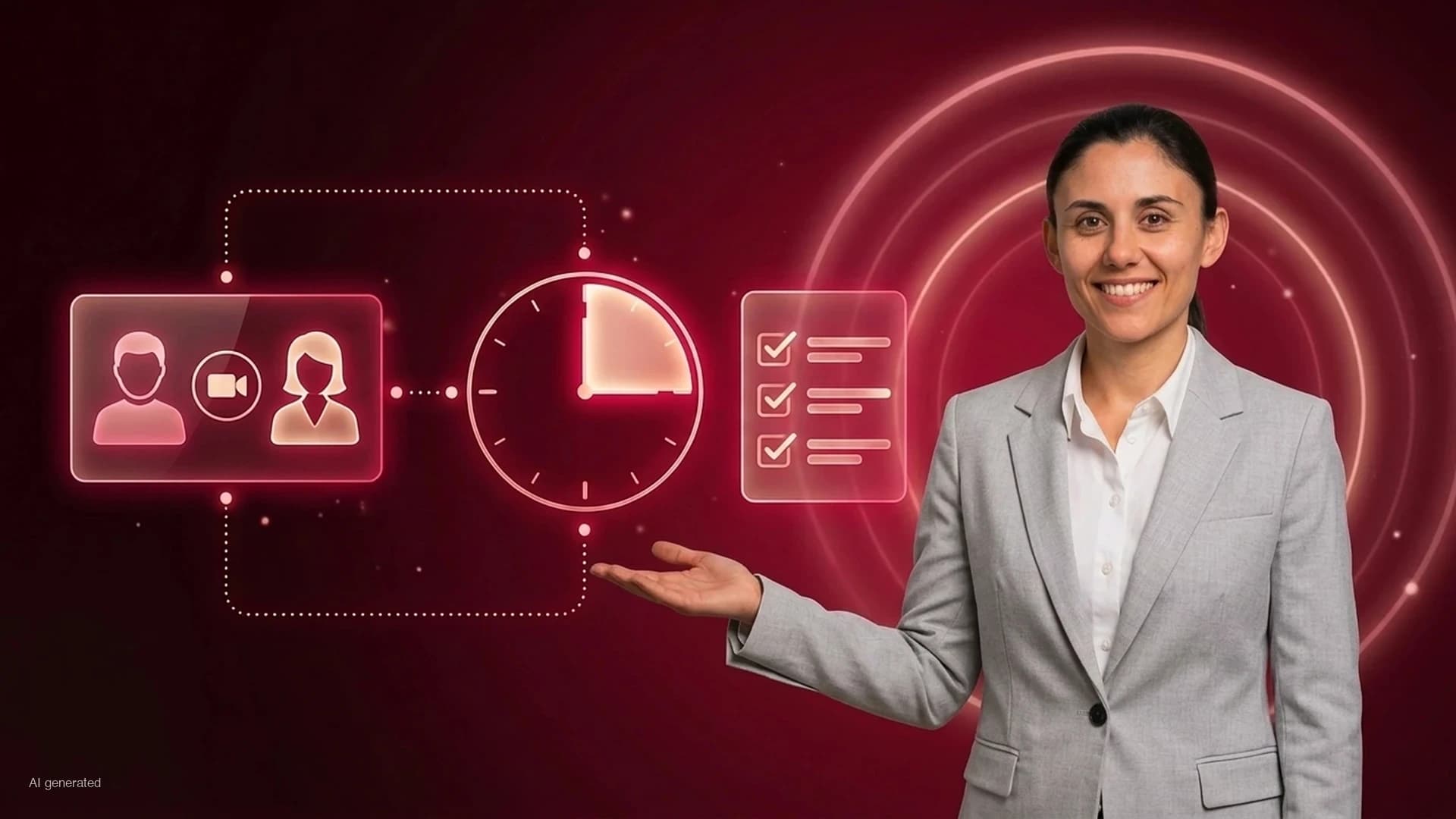
We offer a free 15 to 20 minute video call with our founder, Mariela, called the Free Efficiency Assessment. Because business owners are pitched software and consulting every day, it is fair to wonder whether a free call is a disguised sales trap. Here is what we ask during those 15 to 20 minutes, what we aim to cover, and how we prefer to start.
Key points
- The free Efficiency Assessment is a working conversation with Mariela to find the one or two places where your business loses the most revenue, customer speed, or skilled staff time.
- We do not use the call to pitch software subscriptions or show slide decks, and we prefer to start by discussing your workflow without asking for client files.
- Our goal is for you to walk away with a clearer picture of what your biggest bottlenecks cost you and whether they look worth fixing.
Why owners hesitate to book a free call
If you run a heating and cooling business, an accounting practice, or an independent insurance agency, your calendar is already full. You have likely sat through demonstrations from software vendors who promised to transform your office, only to discover they were selling a complicated platform your team had no time to learn.
Recent US industry surveys show why owners are skeptical of outside pitches, yet still looking for practical help. In ServiceTitan's State of AI in the Trades report, published September 29, 2026, only 11% of trades contractors place high or complete trust in AI tools, while 58% report little or no trust. In that same September 29, 2026 survey of 1,017 US residential and commercial contractors, money was rarely the main objection: purchase cost ranked last among barriers at 17%, while 43% pointed to a lack of clear use cases.
Insurance and accounting owners describe the same gap. According to the Big "I" 2026 Agency Universe Study, reported by Insurance Journal on September 24, 2026, 60% of independent insurance agencies name a lack of knowledge about capability as their top barrier. Across all sectors in the Federal Reserve's 2026 Small Business Credit Survey Report on Employer Firms, 46% of employer firms report that hiring or retaining qualified staff is a challenge, and among firms using AI, 49% are still only experimenting while just 7% have it fully integrated.
Free generic tutorials are everywhere, and according to the Thryv 2026 survey reported by CPA Practice Advisor on July 14, 2026, 70% of small business owners say they still need more training. What you cannot get from a generic video is someone looking at your specific operation and talking through where missed calls, slow follow-ups, or repetitive admin are holding you back.
Why the Free Efficiency Assessment costs nothing
We give the same honest answer every time someone asks why we do not charge for this call: it is free because Mariela can only tell what is worth fixing after she has seen how work moves through your business, and a short call is the fastest way to see it.
We are based in Europe, and we work remotely and meet on video. We start by listening to how your office runs. Every business has its own habits, its own software stack, and its own unwritten rules.
Spending 15 to 20 minutes on video with Mariela lets both sides look at the facts first. You get a practitioner's eyes on where your business may be losing revenue and staff capacity without spending a dime, and we find out whether your firm actually has a bottleneck worth our help.
What we ask to spot missed revenue and admin cost
There is no slide deck in the free Efficiency Assessment. Mariela does not spend the call talking about our company or listing technical buzzwords. Instead, she asks plain questions about how work moves through your office from Monday to Friday.
First, we look at how work arrives and who catches it. In a home services shop, that starts with the telephone. According to Invoca's 2026 Home Services Lead Conversion Benchmarks Report (July 2026), only 52% of inbound calls to home services businesses are answered by a person. Mariela asks who picks up when your dispatchers are on another line, what happens after hours, and how long a missed caller waits before someone calls or texts them back.
Second, we look at where work waits between people. For example, in an electrical or plumbing company, an estimate might go out on Tuesday and sit untouched because nobody owns the follow-up on Thursday. In a CPA firm, a tax return might stall because a client still owes a missing schedule, and a partner has to remember to check the inbox and write another reminder. In an insurance agency, a commercial endorsement or certificate request might wait in a shared inbox until an account manager has time to copy policy details by hand.
Third, we ask where your skilled people type the same details twice. For example, an office coordinator might take a customer's address and job notes from an email, type them into a scheduling board, and type them again into a billing system. As we explain in how to map the process before you automate it, these handoffs and private tracking lists are often where payroll gets tied up in admin instead of work that earns.
What you walk away with in 15 to 20 minutes
By the end of the call, we aim to narrow the conversation down to the one or two places where your business appears to lose the most revenue or tie up the most skilled staff time.
Even if we do not work together afterward, our goal is for you to walk away with a clearer view of those bottlenecks and why they may be happening. Sometimes the issue is an unclear handoff between the field and the office, or a built-in reminder feature inside the software you already pay for that nobody turned on. When a simple adjustment inside your existing tools looks like enough, we prefer to point that out first, following the same principle we cover in when a simple fix beats a complex tool.
If there is a larger bottleneck worth examining properly, Mariela can explain our paid Operations Audit, where we map your workflow by task and person, calculate what each gap costs in staff time and missed business using your own figures, give you a plain ordered list of what to fix, and build the first fix so you can see it working before deciding on anything else. You can read how we calculate the cost of a bottleneck in how to calculate what office bottlenecks and missed calls cost.
How we prefer to start the conversation
You decide what it touches. That approach starts on the first phone call.
During the free Efficiency Assessment, we do not ask for login passwords, sensitive client folders, tax returns, or customer lists. Because this initial conversation is about how a quote follow-up, a missed-call callback, or a document reminder moves through your office, we prefer to talk through the steps without looking at private records. For accounting and insurance principals with strict regulatory duties, we explain how we scope early work in what we will never touch: the data boundary.
We also prefer to look at the software your team already knows before suggesting anything new, and there is no pressure to make a buying decision while you are on the video call. You can take your notes, talk them over with your office manager or partner, and review how our steps fit together on our services page.
If you want to see where your business is losing time and money, Book Your Free Efficiency Assessment with Mariela.