
The European Agency Losing Business on Leads It Already Had
A European agency had plenty of inquiries, yet slow follow-up cost it business. Here is what we fixed and what US service firms can learn from the work.
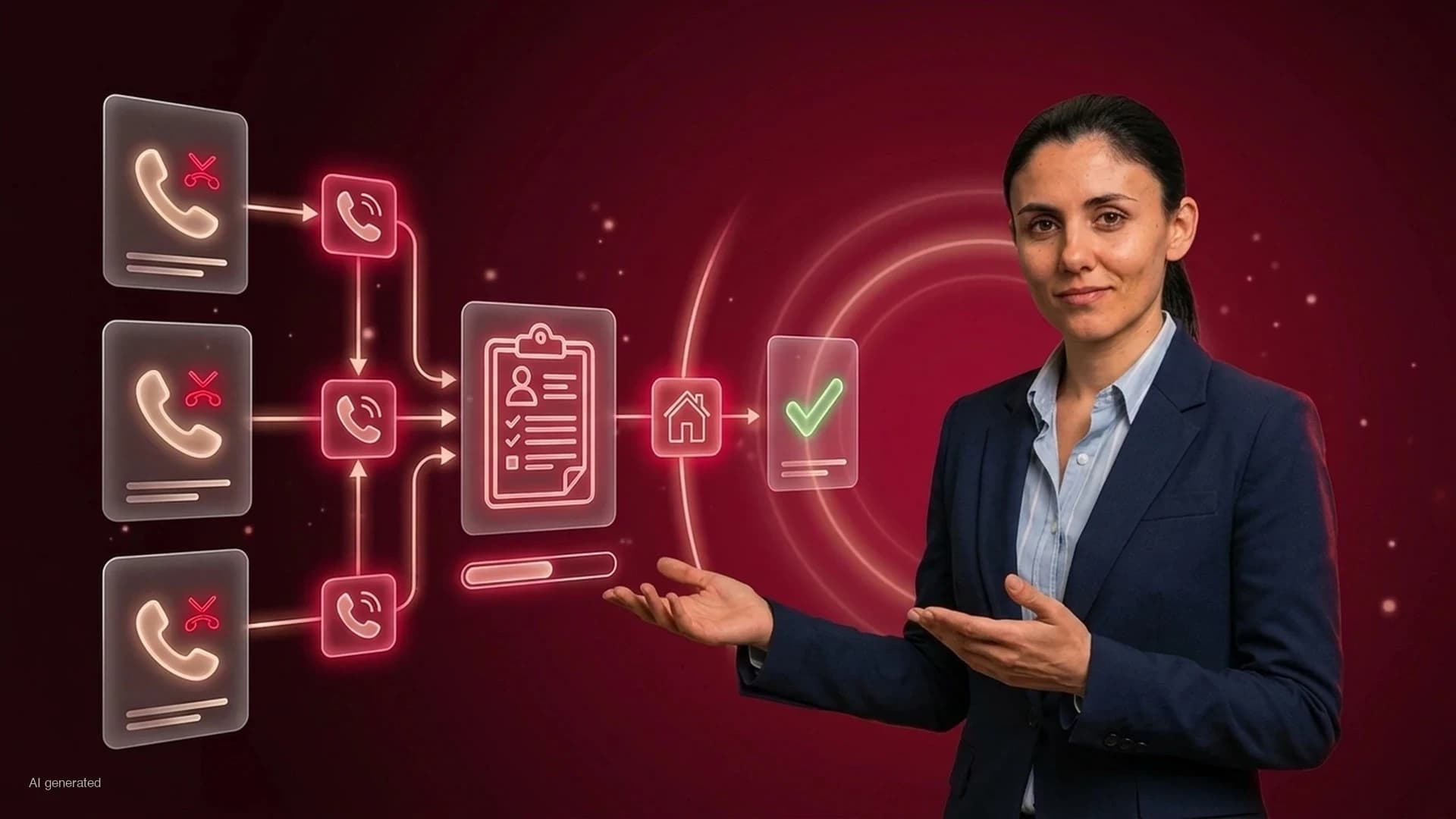
The inquiries were coming in. Advertising was working. The agents were busy. Yet potential clients were disappearing between the initial inquiry and the next conversation, taking prospective business with them.
This happened at a real estate agency in Europe we worked with. The agency is unnamed. The people being lost were prospective clients who had already expressed interest, not an established book of paying customers.
For a US service-firm owner, the familiar part may be the revenue gap after the lead arrives. For example, an HVAC customer requests an estimate, someone makes contact, and the next call depends on whoever remembers it. When follow-up lags, the customer hires whoever responds faster. That example illustrates the pattern; it is not another client case.
Key points
- More inquiries can expose gaps in ownership, records, and follow-up that cost the business jobs.
- Moving to new software does not fix a poorly organized process by itself.
- A shared record and a visible next action give staff a faster, more reliable way to move prospects forward.
Why inquiries were slipping away inside the agency
Agents relied on memory and their own ways of organizing work. Follow-up was inconsistent, and contact notes did not follow a shared standard. Some inquiries went untouched; others received attention after the opportunity had passed.
Advertising campaigns fed separate tabs in Google Sheets. A person responding to different campaigns could appear in different places, prompting calls from different agents. The owner also lacked a consolidated view of activity and performance.
Our original case account published by Marinext AI documents those problems and the work described below. It does not provide a controlled before-and-after revenue comparison, so we cannot turn this case into a dollar return or a conversion promise for your firm.
The operational problem was already clear enough to act on: the agency had captured interest without a dependable way to carry every inquiry through the next step.
The software move exposed the same old structure
We began by standardizing the existing database, then migrated it from Google Sheets to Airtable. Initially, the separate-table-per-campaign structure carried over.
Mariela, our founder, raised the issue with the owner. We reorganized the records around apartments, houses, and referrals, with the referral table included at the client's request.
That distinction matters. The move gave the agency different software, but the restructuring addressed how information was organized. Keeping the old campaign-based layout would have meant more scattered records as campaigns were added.
For example, a plumbing company could recreate the same difficulty by keeping website requests, phone inquiries, and advertising leads in disconnected lists. A returning customer might be visible to the person answering the phone but invisible to the person reviewing online requests.
Before recommending a replacement tool, we would ask how the office connects those records today. The answer may be an adjustment to what the business already uses. You can see the questions we start with in map the process before you automate it.
Make the record useful to the next person
For the European agency, we added duplicate checks, standardized first-contact notes through an internal form, and built daily priority emails. The work also included AI-generated conversation preparation and performance reporting.
Those are documented changes in the original case account. The transferable lesson is the order: a reminder becomes more useful when the underlying record can tell the next person what has happened.
For example, consider an electrical contractor whose office has to cover for an absent coordinator. A note saying "spoke to customer" leaves the replacement guessing. A consistent record could show the request, the current status, the agreed next action, and the employee responsible.
We would agree on those fields with the staff who use them. An intake form that demands irrelevant information simply creates another chore. A useful form asks for what the next person needs to continue the work.
The goal is a record someone can act on without reconstructing the conversation from memory or asking the owner to interpret it.
Treat repeat inquiries carefully
Duplicate checking sounds straightforward until the same person returns with a different need.
For example, a homeowner might ask an HVAC company about a repair and later request a replacement estimate. An accounting prospect might contact the firm again after their situation changes. Those should not automatically disappear because a matching email address already exists.
We would separate the question "Have we seen this person before?" from "Is this the same open request?" The answer depends on how the business works, so it belongs in the process rules.
A flag for a person to review can be more useful than automatic deletion or merging. Staff can see the possible connection while preserving the information needed to understand it.
This is a good example of a small decision that deserves attention before automation. Without it, a tidy-looking database can hide work the team still needs to do.
Give follow-up an owner and a stopping point
For a US service firm, we would examine what makes a lead ready for another contact. An overdue list alone cannot explain whether the customer is waiting for pricing, whether an estimate needs revision, or whether the customer has already said no.
For example, an independent insurance agency could use an internal task list to show which prospect conversations need attention. That is different from authorizing a tool to interpret coverage needs or send advice. The scope should stay explicit.
A useful follow-up process identifies the responsible person, the next action, and the event that closes or changes the task. It also needs a way to reflect replies that arrive by phone rather than through the original form.
You decide what it touches. We would begin by mapping the handoff and the information needed to track it, then agree on any access before a fix is built.
Measure the handoff you are trying to improve
Our original account reports faster contact with new prospects, fewer missed follow-ups, and better visibility into each agent's work. Those are reported observations from this agency. The account does not provide the underlying before-and-after measurements needed to turn them into a benchmark for your business.
For your business, we would establish a starting point using your records. Useful questions include whether new inquiries have an owner, whether follow-ups happen when intended, and how often someone has to search for the last conversation.
Then we would compare the same measures after the change. If contacts happen sooner but the office spends more time correcting reminders, that extra work belongs in the evaluation.
Sales outcomes matter too, but pricing, demand, availability, and the customer's circumstances can affect them. We should distinguish a more dependable office process from a claim that the process caused every sale.
Stop losing the inquiries already waiting
Before deciding that the answer is more advertising, follow a recent inquiry through your business. Find its owner, the last action, and the next action. Check whether someone covering the job could find the same information without calling you.
That exercise can reveal a useful starting point for the Operations Audit. We usually start by mapping where work waits and examining what the gap costs you in staff time and missed business using your own figures. That gives us a basis for discussing what may be worth fixing first, within the scope you are comfortable with.
Book Your Free Efficiency Assessment with Mariela to talk through where inquiries and follow-ups stall in your business.